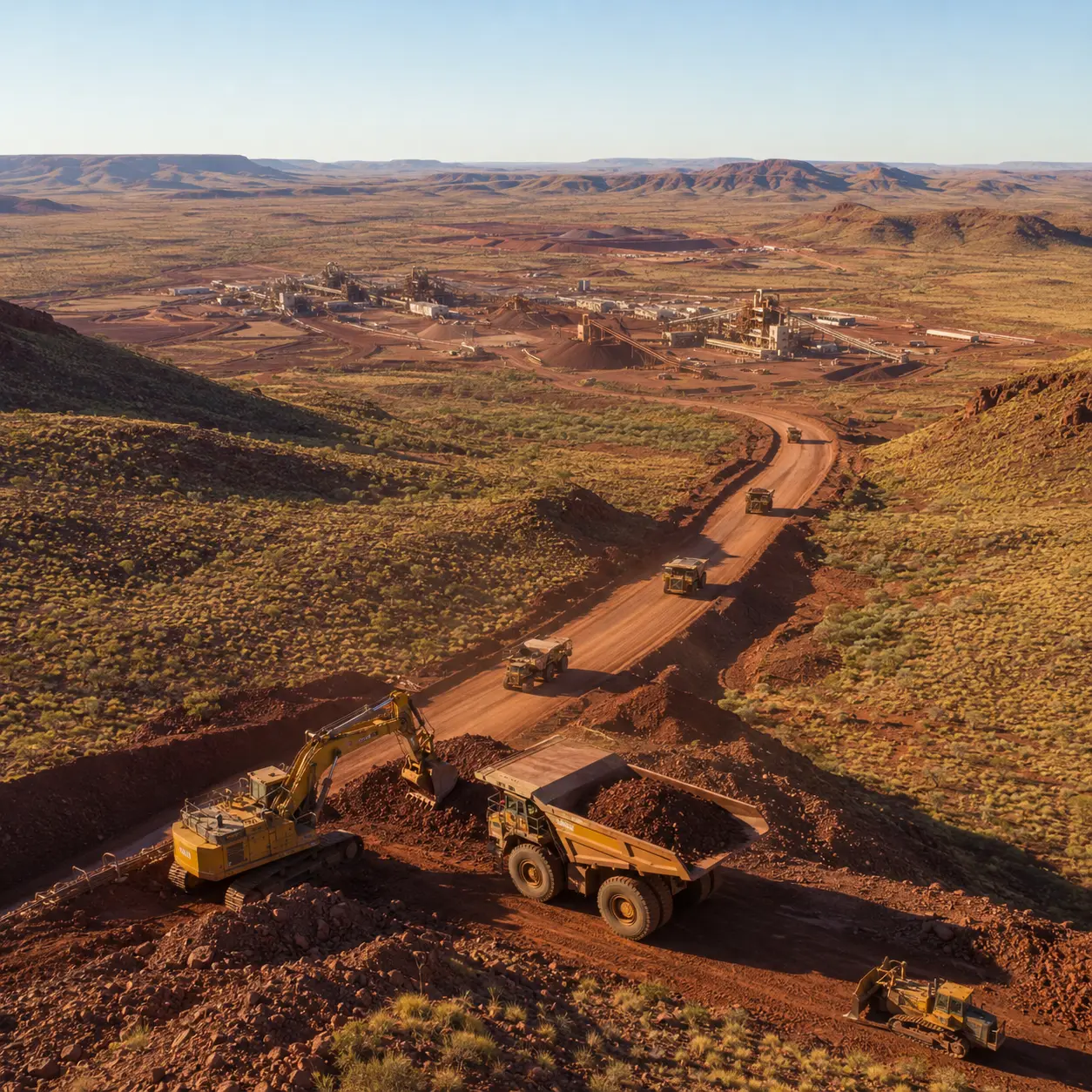
Open-cut mining fleet representing operations careers in Australian mining
← Six role families

Role family 04

Operations careers across pit, plant, rail and port.

Operators turn the mining plan into safe, controlled movement of material. The strongest careers combine plant competence, situational awareness, disciplined handovers and an understanding of the wider system.

The core idea

Operating is a decision role—not just seat time.

An operator monitors equipment, ground, people, process conditions and production constraints while staying inside procedures and authorisations. The machine or plant is only one part of the job.

Entry routes differ by commodity and employer. Some operations train new starters; others recruit workers who already have civil, quarry, processing, rail or underground evidence.

Good operators know what normal looks like, recognise change early and make the next shift easier to run.

Where the work sits

Six operating systems from extraction to export.

Titles and work boundaries vary between owners, contractors, projects and commodities. Read the actual scope behind the vacancy.

01

Open pit

Load-and-haul fleets, drills, ancillary equipment, roads, dumps, ROM pads and autonomous operating zones.

02

Underground

Development, production, bogging, trucking, drilling and services in a tightly controlled underground environment.

03

Processing plant

Crushing, screening, milling, separation, dewatering and utility circuits monitored in the field and control room.

04

Materials handling

Conveyors, feeders, stackers, reclaimers, bins and train load-out linking mine and transport systems.

05

Rail

Heavy-haul train operation, network safeworking, loading, unloading and communication across long-distance corridors.

06

Port

Stockyards, car dumpers, reclaiming, shiploading and marine interfaces that complete the export chain.

Role guide

Ten operations pathways.

Every band is an indicative 2026 Australian mining range, not a promised rate. Open the salary guide for the basis and comparison rules.

01Entry pathway

Trainee operator

Open pit, processing, rail, ports or underground programs

Indicative 2026 Australian mining band$80k–$115kAUD annual gross, generally before super
Typical work
Complete structured learning, supervised practical tasks, inspections, communications and progressively authorised operating duties.
Foundation
A genuine vacancy, medical and screening requirements, baseline work discipline and the employer's training pathway. Buying generic tickets does not guarantee entry.
Evidence to show
Transferable shift, safety, vehicle, production or industrial experience; learning examples; reliability; and a clean explanation of why this operating environment fits.
02Load & haul

Mobile plant operator

Open pits, waste dumps, ROM pads, civil works and rehabilitation

Indicative 2026 Australian mining band$105k–$160kAUD annual gross, generally before super
Typical work
Operate haul trucks, loaders, dozers, graders, water carts or support plant within traffic, ground and production controls.
Foundation
Verified competence for the equipment and site. A civil ticket or past operation can support entry but does not automatically transfer to a mine or machine model.
Evidence to show
Machine type and size, material and terrain, pre-starts, operating hours, hazards, production interface, defects and supervisor who observed the work.
03Production loading

Excavator or shovel operator

Open-cut production benches and ROM feed

Indicative 2026 Australian mining band$120k–$180kAUD annual gross, generally before super
Typical work
Load haul units, manage dig conditions and floor control, identify hazards and coordinate with dispatch, geology and mine supervision.
Foundation
Substantial operating evidence and site verification for the machine and production environment. Large mining excavators are not entry-level simply because smaller machines were used elsewhere.
Evidence to show
Machine class, material, bench or face conditions, truck interface, dig plan awareness, performance and abnormal conditions managed.
04Drill & blast

Drill operator

Surface production, exploration or underground drilling

Indicative 2026 Australian mining band$130k–$195kAUD annual gross, generally before super
Typical work
Set up and operate the nominated drill, monitor drilling conditions, record hole data and manage exclusion, ground and explosive-work interfaces.
Foundation
Equipment and mine-type competence plus role-specific training. Production, exploration and underground drilling are distinct pathways.
Evidence to show
Rig type, drilling method, hole parameters, ground conditions, checks, records, faults and interaction with blast or technical teams.
05Processing

Process plant operator

Crushing, screening, milling, separation and dewatering circuits

Indicative 2026 Australian mining band$100k–$155kAUD annual gross, generally before super
Typical work
Inspect field equipment, start and stop plant under procedure, monitor process conditions, take samples, respond to alarms and complete handovers.
Foundation
Process, industrial or production capability supported by site training. Mechanical awareness helps, but operators must stay within trade and isolation boundaries.
Evidence to show
Circuit and equipment, operating parameters, field checks, abnormal condition, action taken, escalation and production-quality consequence.
06Central control

Control-room operator

Processing plants, materials handling and remote operations centres

Indicative 2026 Australian mining band$120k–$175kAUD annual gross, generally before super
Typical work
Monitor integrated systems, coordinate starts and stops, manage alarms and constraints, communicate with field crews and maintain a clear operating log.
Foundation
Strong plant knowledge, procedure discipline and verified control-system competence. Control-room authority is site and system specific.
Evidence to show
System boundary, control platform, operating modes, alarm response, field coordination, shift handover and decisions made under changing conditions.
07Rail

Train or rail operator

Heavy-haul mine rail networks, yards and terminals

Indicative 2026 Australian mining band$110k–$165kAUD annual gross, generally before super
Typical work
Operate trains or rail plant within safeworking rules, network authorities, fatigue controls and loading or unloading interfaces.
Foundation
Network-specific rail safety competence, medical requirements and employer authorisation. Road-vehicle experience is not a substitute.
Evidence to show
Network and rolling stock, safeworking system, route or yard scope, abnormal events, communications and currency.
08Export system

Port or stockyard operator

Car dumpers, conveyors, stackers, reclaimers and shiploaders

Indicative 2026 Australian mining band$105k–$160kAUD annual gross, generally before super
Typical work
Operate materials-handling plant, inspect work areas, manage product movement and coordinate maintenance, rail and marine interfaces.
Foundation
Site plant competence, port access where required, process awareness and operating discipline around large automated equipment.
Evidence to show
Plant and product stream, operating mode, inspections, alarms or constraints, handover and interface with control room or maintenance.
09Underground production

Underground production operator

Declines, stopes, headings, ore passes and underground service areas

Indicative 2026 Australian mining band$140k–$230kAUD annual gross, generally before super
Typical work
Operate production or development equipment under ground-control, ventilation, traffic, re-entry and emergency systems.
Foundation
Underground induction, equipment competence and mine-specific training. High earnings often reflect experience, scarcity, roster and higher-consequence conditions.
Evidence to show
Mine method, machine, area, ground and ventilation controls, production task, shift records and emergency-system familiarity.
10Capability

Trainer and assessor

Site training teams, operating crews and contractor mobilisation

Indicative 2026 Australian mining band$120k–$175kAUD annual gross, generally before super
Typical work
Deliver structured training, observe practical performance, assess evidence, maintain records and support consistent site competence systems.
Foundation
Current training and assessment credentials where required plus credible operational depth in the tasks being trained or assessed.
Evidence to show
Equipment and standards covered, learner groups, assessment method, evidence decisions, record controls and operational outcomes.

Capability foundations

Five foundations behind credible operator competence.

Verify current qualification, licensing, mine, employer and task requirements before paying for training.

01 · Equipment

Verified machine or plant capability

Employers need evidence for the actual equipment, scale, environment and task—not a generic claim of operating experience.

02 · System

Understand upstream and downstream

Strong operators see how a decision affects loading, processing, maintenance, product quality, rail, port or the next crew.

03 · Control

Procedures and authorisations

Starts, stops, isolation interfaces, traffic, alarms, safeworking and restricted areas depend on current site systems.

04 · Condition

Know normal and report change

Pre-starts, field inspections, trends, alarms and clean defect reporting protect equipment and production.

05 · Handover

Make the next shift safer

A useful handover identifies plant state, active hazards, defects, work in progress, constraints and expected next actions.

Career map

Progress from supervised operation to system leadership.

Progression is not automatic. It comes from broader competence, stronger evidence and accountability other people can verify.

  1. 01

    Trainee

    Learn the site, equipment, procedures, communication and supervised task standards.

  2. 02

    Authorised operator

    Operate a defined machine or circuit consistently and document conditions clearly.

  3. 03

    Multi-skilled or senior

    Broaden across equipment, process areas, complex conditions and team support.

  4. 04

    Control or capability

    Move into control room, dispatch, training, coordination or specialist operating work.

  5. 05

    Leadership

    Lead a crew, production area or operating system with wider people, risk and performance accountability.

Mobile fleet

Truck · ancillary · excavation · drilling

Depth grows with equipment class, production conditions, system awareness and response to changing ground or traffic.

Process & logistics

Field · control room · rail · port

Progression follows integrated plant knowledge, accurate decisions, clear communication and reliable handover.

People & performance

Trainer · leading hand · supervisor

Leadership adds capability assurance, work allocation, production coordination and accountability for the crew.

The evidence test

Make operating experience measurable and safe.

Hours can help, but context matters more: equipment class, environment, task, conditions, operating system, results and observed behaviour.

Too vague

“Experienced all-round operator with a strong safety focus.”

More useful

“Operated CAT 793 haul trucks on a 7/7 open-pit roster, completing pre-starts, following dispatch and traffic controls, reporting defects early and maintaining clean shift handovers across day and night crews.”

EvidenceShowAvoid
EquipmentMake, model, size, plant or circuitSaying only 'heavy machinery'
EnvironmentOpen pit, underground, process, rail or portTreating all operation as transferable
TaskLoaded, hauled, drilled, monitored, sampled or controlledListing machines with no work context
ConditionsGround, traffic, weather, alarms, feed or operating modeClaiming ideal-condition experience only
RecordsPre-start, log, defect, production or handover informationUsing 'safety first' as evidence
VerifierTrainer, assessor or supervisor who observed the workUnsupported hour claims

Important boundaries

Shortcuts that do not hold up.

01

“A ticket makes me site competent.”

A course can provide training evidence. The employer still verifies competence for the actual equipment, task and operating environment.

02

“All operator hours are equal.”

Machine class, scale, material, terrain, production pressure, operating system and how recently the work was performed all matter.

03

“Operators can fix what they operate.”

Operators inspect, respond and report within procedure. Trade, isolation and maintenance boundaries still apply.

04

“Automation removes the operator.”

Automation changes the work toward system monitoring, exception response, field interaction and data-led control; it does not remove operational accountability.