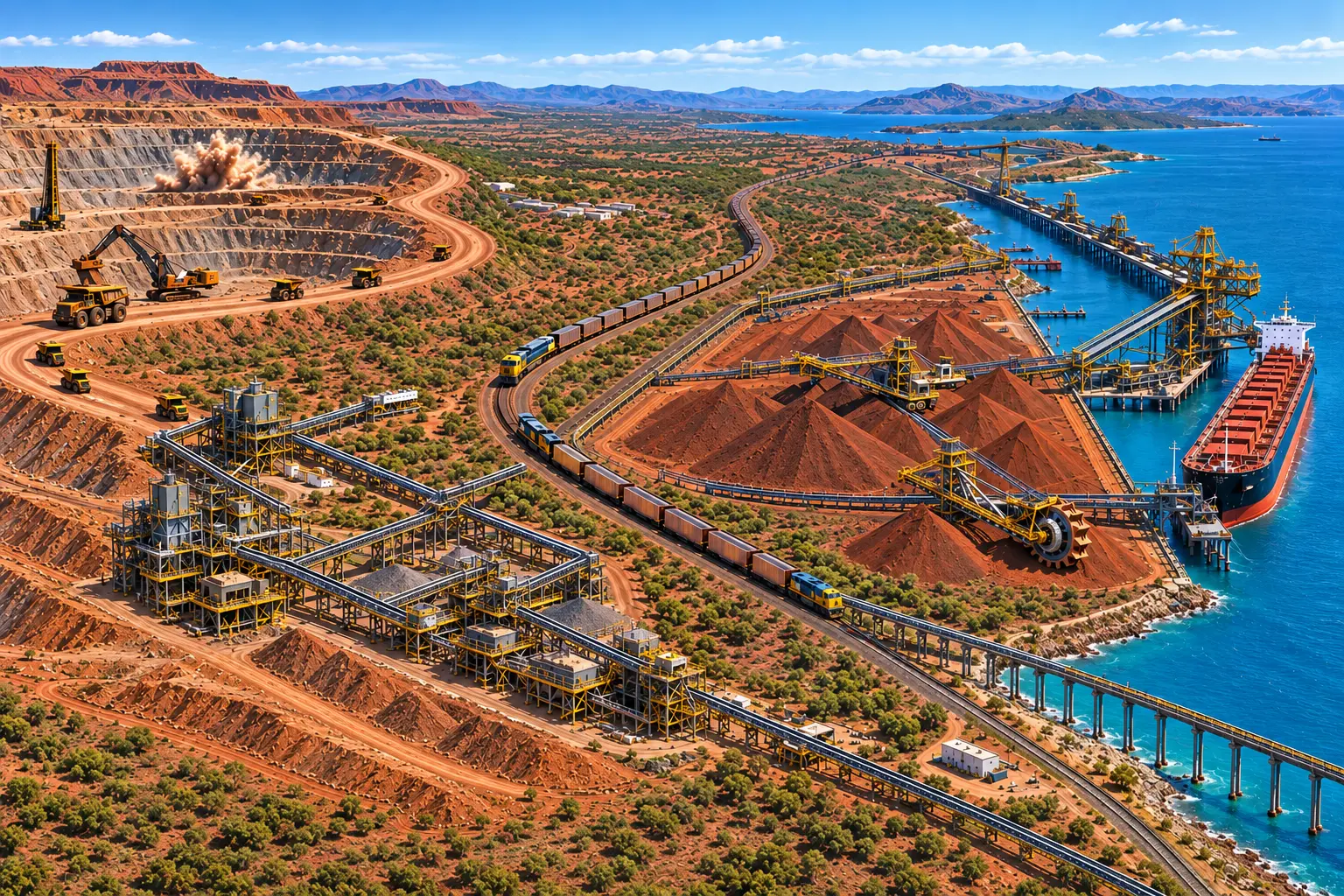
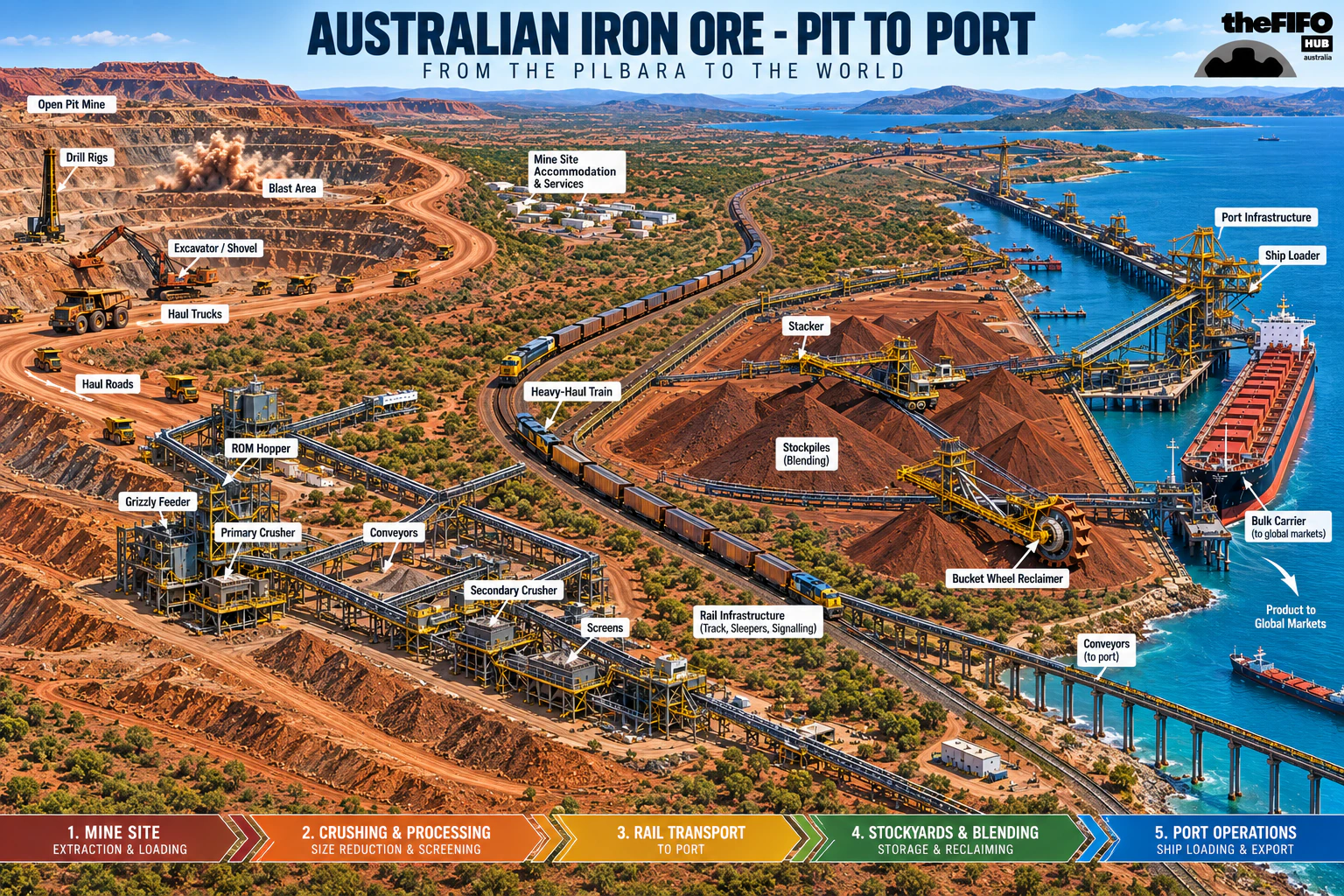
Aerial view of a Pilbara iron ore mine, processing plant, railway, stockyard and export terminal

Pit to Port

Pilbara iron ore.
From pit to port.

Follow the connected mines, processing plants, heavy-haul rail, stockyards and port equipment behind Australia's iron ore exports.

Choose a commodity

Four resources. Four different operating chains.

Iron ore is the original pit-to-port system. Coal, lithium and gold follow different processing, transport and customer pathways.

One operating system

The supply chain is only as strong as the handover between stages.

Pit to port is a practical way to understand iron ore operations. Instead of viewing a mine, train or shiploader in isolation, it shows how material, information, maintenance and people move through the complete chain.

A delay at one asset can change the work required many kilometres away. Reliability is a system outcome.

Animated system map

One parcel of ore. Seven handovers.

Ore moving
01020304050607
  1. 01PitDrill, blast, dig and haul
  2. 02ProcessFeed, crush, screen and blend
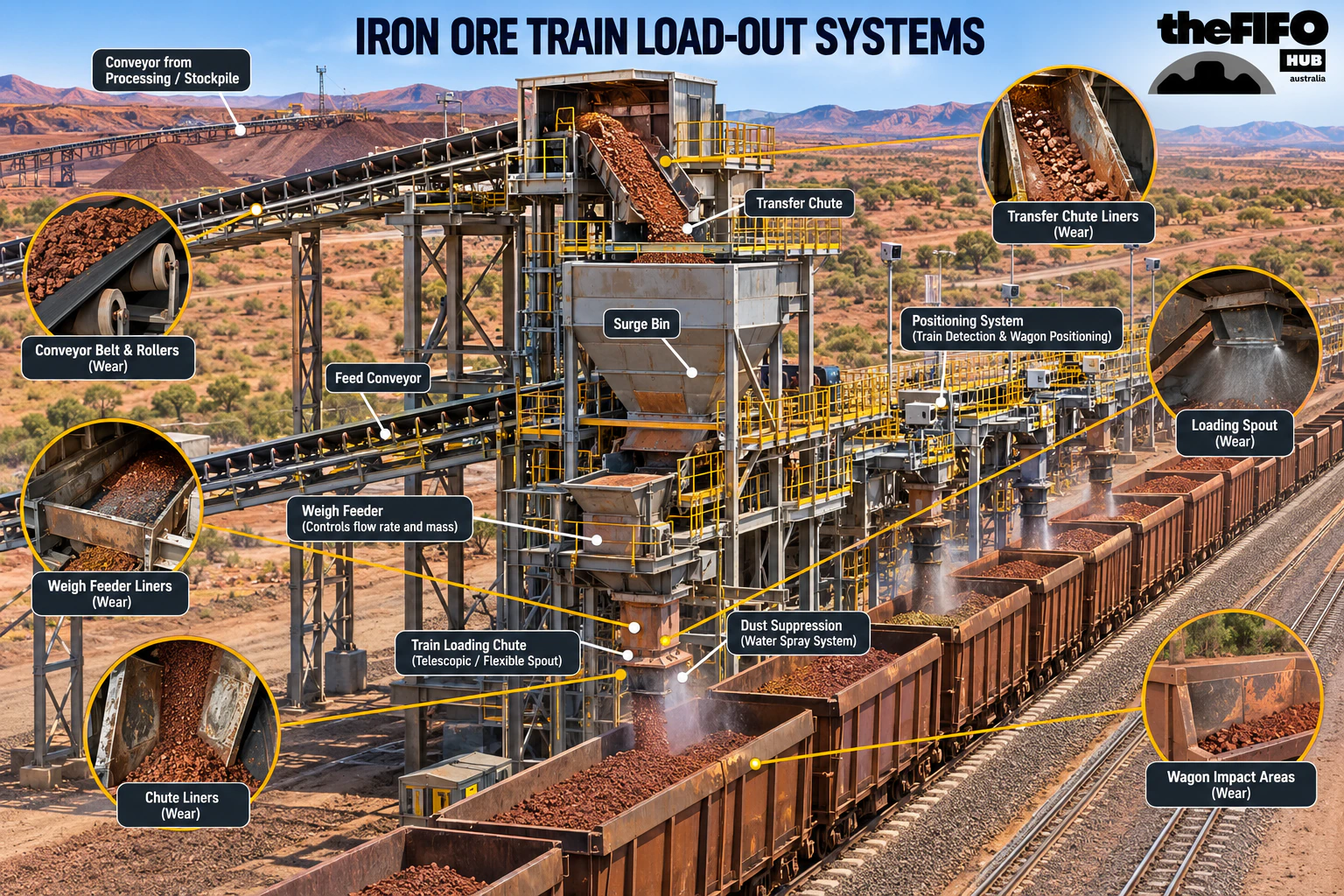
  3. 03Load-outMeter ore into rail wagons
  4. 04RailHeavy-haul movement to port
  5. 05StockyardDump, convey and stack
  6. 06ReclaimRecover and transfer to wharf
  7. 07ShipLoad nominated vessel holds
Conceptual flow only. The exact process, plant arrangement and handover points differ by operation, ore type, product specification and port.
Labelled aerial schematic showing an Australian iron ore system from open-pit mining and processing through rail, stockyards and port operationsOpen full size ↗
Whole-system view: follow the material path from the drill and blast area through crushing, rail transport, stockyard blending and shiploading. Conceptual learning visual—not a site flowsheet or operating instruction.

The operating journey

What happens at each handover.

Follow a representative Pilbara iron ore flow. Every operation is configured differently, but the system logic is broadly recognisable.

Create and move run-of-mine ore

Pit

Geology and mine planning identify the ore. Drill and blast crews fragment the rock, then excavators or shovels load haul trucks for the run to the crusher or run-of-mine stockpile.

Key handover
Fragmented ore reaches the ROM pad or crusher feed in the planned material stream.
System dependency
Mine plan, blast result, loading-tool match, haul roads, dispatch and crusher availability.
Prepare a consistent saleable product

Processing

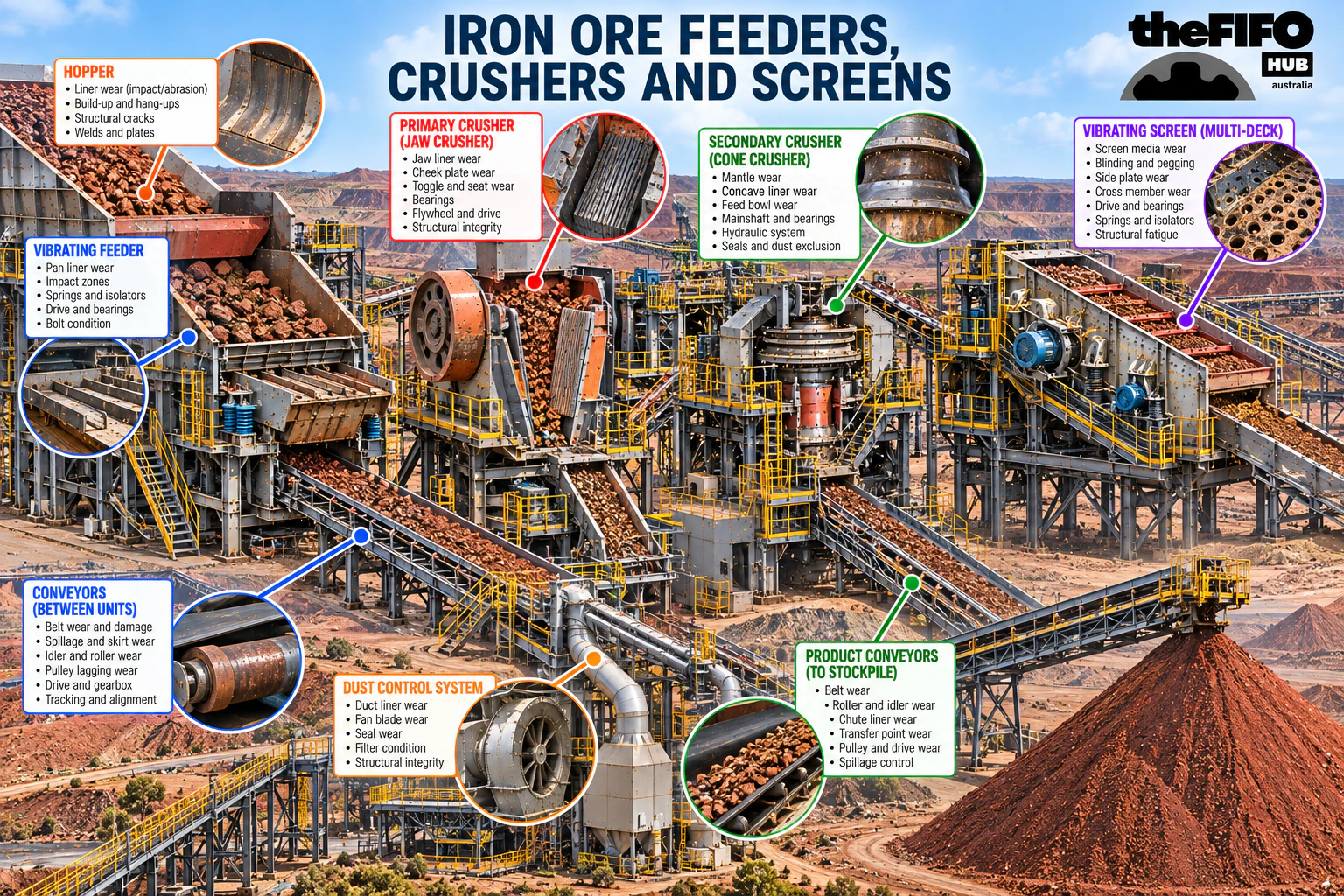
Feeders regulate the flow into crushers. Screens separate material by size, while site-specific circuits may wash, beneficiate or blend ore before it reaches product stockpiles or train load-out.

Key handover
The plant delivers a controlled product stream with the size and quality required by the downstream route.
System dependency
Feed condition, crusher and screen circuit, chute flow, conveyor availability and product-quality decisions.
Transfer product into the rail system

Rail load-out

Load-out bins, gates and weighing or control systems place ore into each wagon. Consistent loading matters because train performance, axle loads and the next port handling stage all depend on it.

Key handover
Each wagon leaves with a controlled load profile and the product information required by the rail and port systems.
System dependency
Bin level, gate timing, weighing, sampling, train speed or indexing and wagon-load limits.
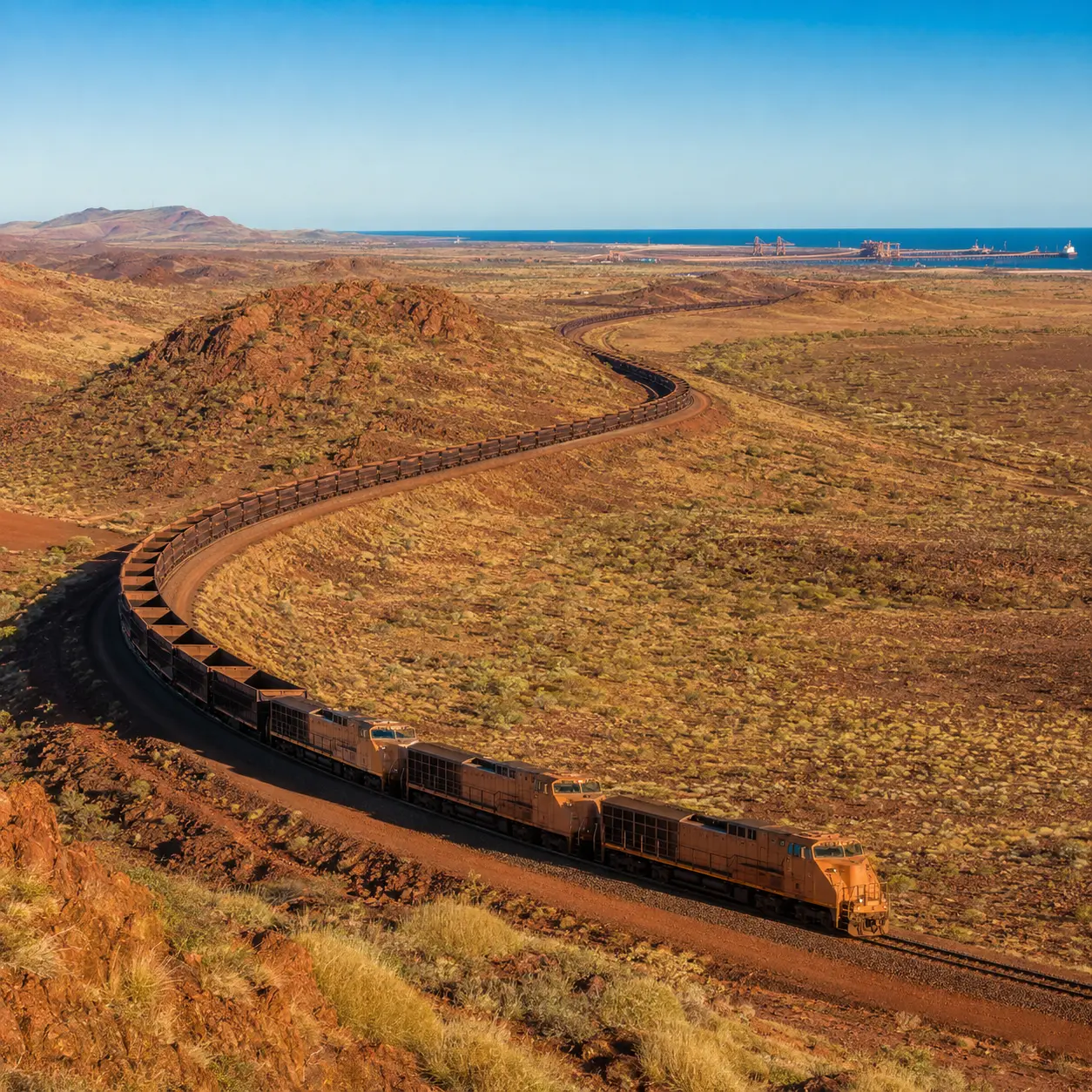
Long iron ore train travelling through the Pilbara toward the coast04
Move bulk tonnes over distance

Heavy-haul rail

Locomotives, ore cars, track, signalling, train control and maintenance facilities operate as one logistics system. The railway is the moving link between inland mines and coastal export terminals.

Key handover
The loaded consist arrives at port in the sequence required by the receival and stockyard plan.
System dependency
Locomotive and wagon condition, braking, track, signalling, network control and dumper availability.
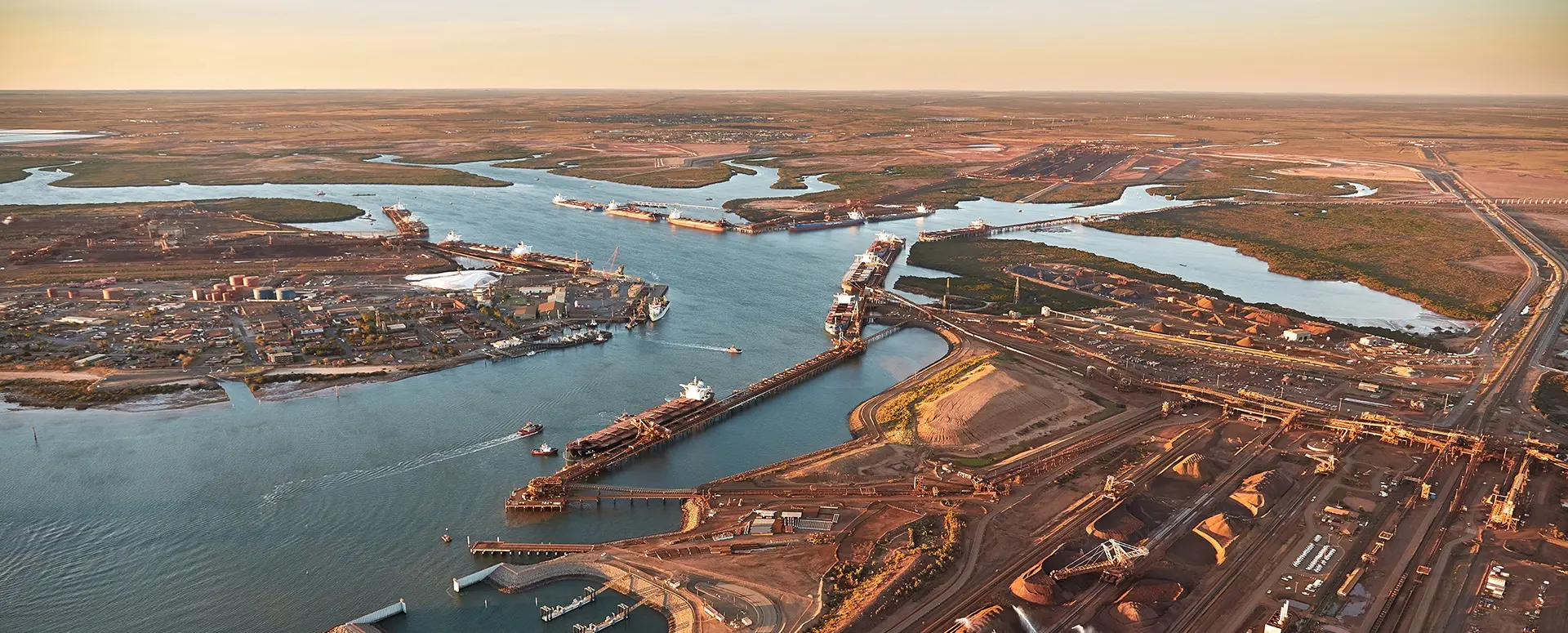
Aerial view of iron ore stockyards, berths and shiploading facilities at Port Hedland05
Receive trains and build stockpiles

Unload and stack

At port, wagons are unloaded through a railcar dumper or another terminal-specific arrangement. Conveyors transfer the ore to stackers, which build planned stockpiles for storage, blending and vessel schedules.

Key handover
Ore is unloaded, transferred and placed into a defined stockpile that remains traceable to the product plan.
System dependency
Train positioning, dumper sequence, hopper and feeder flow, conveyor route, yard space and stacking strategy.
Bucket wheel reclaimer recovering iron ore from a stockpile06
Recover the product and fill the vessel

Reclaim and shipload

Bucket wheel reclaimers recover ore from nominated stockpiles. Yard and wharf conveyors deliver it to travelling shiploaders, which distribute the cargo across nominated holds under terminal and marine controls.

Key handover
The nominated product reaches the correct vessel hold at a rate controlled by the full stockyard-to-berth system.
System dependency
Stockpile access, reclaim sequence, conveyor route, berth readiness, vessel plan, marine limits and shiploader availability.

Images: conceptual editorial and representative visuals from The FIFO Hub media library. Schematics support learning and are not OEM drawings, site flowsheets or operating instructions.

Pit-to-port machine index

Nine equipment families. One connected material path.

Use the summary for context, open The FIFO Hub's full guide for assemblies and maintenance disciplines, then follow the OEM or operator link for authoritative product information.

01Pit

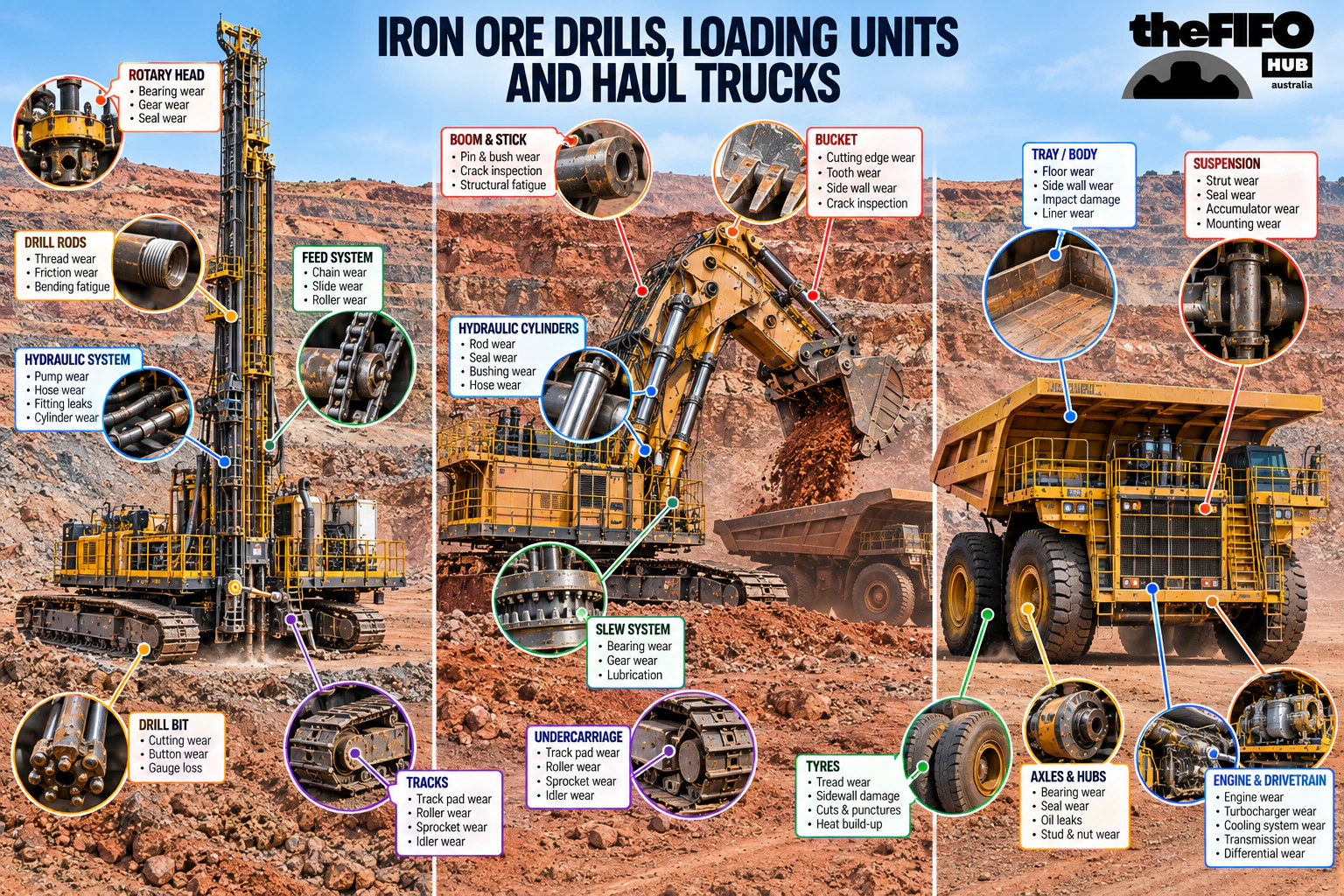
Drills, shovels and haul trucks

Create blast holes, load fragmented material and move ore or waste to the planned destination.

Major assemblies
Drill mast and rotary system; shovel or excavator digging system; truck powertrain, retarding, brakes, steering, tyres and body.
Material handover
Run-of-mine ore at the crusher or ROM pad.
02Processing

Feeders, crushers and screens

Meter incoming ore, reduce top size and classify material into the streams required by the plant and product plan.

Major assemblies
ROM receival, feeder drive and pans or belt, crusher chamber and lubrication, screen decks, exciters, chutes and controls.
Material handover
Controlled size fractions for conveying, recirculation or product storage.
03Rail load-out

Train load-out systems

Place a controlled mass and profile of product into each moving or indexed ore car.

Major assemblies
Load-out bin, liners, feeders, gates, chutes, weighing, train detection, sampling, PLC logic and communications.
Material handover
A loaded, measured and documented ore train.
04Heavy-haul rail

Locomotives, ore cars and rail

Move bulk tonnes between inland mining hubs and coastal terminals as one controlled railway system.

Major assemblies
Traction and energy systems, braking, wheelsets, bearings, couplers, track, points, signalling, wayside detection and network control.
Material handover
The planned train arrives at the nominated port receival stream.
05Port receival

Railcar dumpers and positioners

Index and secure wagons, unload ore into a hopper and release the empty consist through a controlled sequence.

Major assemblies
Indexer or positioner, clamps, dumper barrel or tippler, support rollers, drives, hopper, feeders, dust control and interlocks.
Material handover
Ore at a controlled rate on the port receival conveyor.
06Stockyard

Stackers and stockpiles

Place incoming product into defined stockpiles for storage, sequencing, blending and later reclaim.

Major assemblies
Tripper, boom conveyor, long travel, slew, luff, brakes, restraints, cable management, positioning and pile-profile controls.
Material handover
A planned stockpile available to the reclaim and shipping schedule.
07Reclaim

Bucket wheel reclaimers

Cut controlled slices from a nominated stockpile and feed the recovered product onto the outbound yard conveyor.

Major assemblies
Bucket wheel, buckets and drive, discharge chute, boom conveyor, slew, luff, long travel, machine structure and automation.
Material handover
A controlled reclaim stream matched to the outbound route.
08Transfer

Conveyors and transfer stations

Carry ore continuously between machines while controlling belt tension, alignment, loading, discharge and route selection.

Major assemblies
Belt, pulleys, idlers, drives, take-up, cleaners, skirts, chutes, structure, protection, instruments and route controls.
Material handover
A stable material stream at the correct downstream machine or berth route.
09Berth

Shiploaders and berth systems

Receive ore from the wharf conveyor and place it into nominated vessel holds under the loading and marine plan.

Major assemblies
Approach conveyor, tripper or transfer, boom and shuttle conveyor, long travel, slew or luff, telescopic chute, spoon and controls.
Material handover
Export product placed into the vessel in the planned hold sequence.

Technical boundary: Machine capacity, configuration, control philosophy, operating limits, inspection criteria and isolation requirements are site- and asset-specific. Use current OEM manuals, drawings and approved site procedures for work decisions.

Worked example: BHP

Newman to Nelson Point.

BHP's Western Australia Iron Ore network is a useful real-world example of the connected system. Ore from Newman Operations joins the heavy-haul rail network to Port Hedland, where port plant receives, stores, reclaims and loads it for export.

This is an editorial overview, not a route diagram or operating instruction. Individual products may be blended, redirected or handled differently according to the production and shipping plan.

Open the equipment library
2.5+ kmBHP's published train length
264ore cars in BHP's published example
12,500 t/hlisted load rate for certain BHP Port Hedland shiploaders
Published operator and port figures. Equipment arrangements and achievable rates remain site- and berth-specific.

People behind the system

Operations depend on more than operators.

ElectriciansMechanical fittersBoilermakersRiggersOperatorsMaintainersPlannersEngineersSupervisorsRail crewsMarine teamsInspectorsSchedulersSupport teams

Sources and further reading

Go to the operator, port and OEM.

Checked 28 August 2026. External links open the primary source.

Technical note: Capacities, train consists, stockyard layouts and machine arrangements vary. Use current OEM manuals, engineering drawings, approved procedures and site requirements for operational or maintenance decisions.