Drilling entry
Drillers offsiders · Field assistants · Trainee crewsOften promoted as an entry route, but the work can be remote and physically demanding. Read the licence, manual-handling, travel and roster requirements closely.



Getting into FIFO
A realistic Australian pathway from “I want a FIFO job” to an application an employer can assess.
Start with the right question
Ask: “Which FIFO role can I become credible for, and what evidence does that employer need?”
FIFO describes how you travel to work. The actual jobs range from licensed trades and plant operation to drilling, camp services, logistics, technical services and business support. Each path has a different threshold.
More tickets do not automatically make a stronger candidate. Relevant capability, honest evidence and reliability do.
Choose an entry route
Use the pathway closest to your current background. Requirements vary by employer, state, site and task.
Lead with your trade, industrial environment, assets worked on and verifiable scope. A qualification opens the door; relevant evidence strengthens the application.
Explore this pathway →02Employers look for safe, consistent operation and evidence on the relevant machine or process. Trainee and entry programs can be more realistic than applying above your experience.
Explore this pathway →03Short campaigns can build site exposure, fixed-plant familiarity and referees. Work is time-critical and continuity is not guaranteed.
Explore this pathway →Often promoted as an entry route, but the work can be remote and physically demanding. Read the licence, manual-handling, travel and roster requirements closely.
Relevant hospitality, cleaning, warehousing, logistics or customer-service evidence can transfer. The role still requires roster reliability and site-specific onboarding.
Use graduate programs, vacation work and junior technical roles to build operational context. Explain the decisions, systems and stakeholders behind your study or work.
Explore this pathway →Applying on a visa?
A visa can allow you to work in Australia, but it does not replace the qualification, state licence, high-risk work authority or site evidence needed for the role. Working Holiday, Student, Graduate, skilled and employer-sponsored pathways also carry different conditions.
Open the visa & work-rights guideWorking Holiday, Student, Temporary Graduate, Skills in Demand, regional, permanent and points-tested options.
See the likely fit across entry support, qualified trades and technical or professional mining work.
Separate a genuine skilled vacancy, employer nomination and visa assessment from a simple job offer.
Use a current passport, VEVO check, work-rights consent, licences and skills records in verified systems.
Lower-barrier shutdown roles
Trade Assistant work has the lowest formal qualification threshold in the supplied examples. Rigging removes the trade-certificate barrier, but replaces it with licensed high-risk work and practical responsibility.

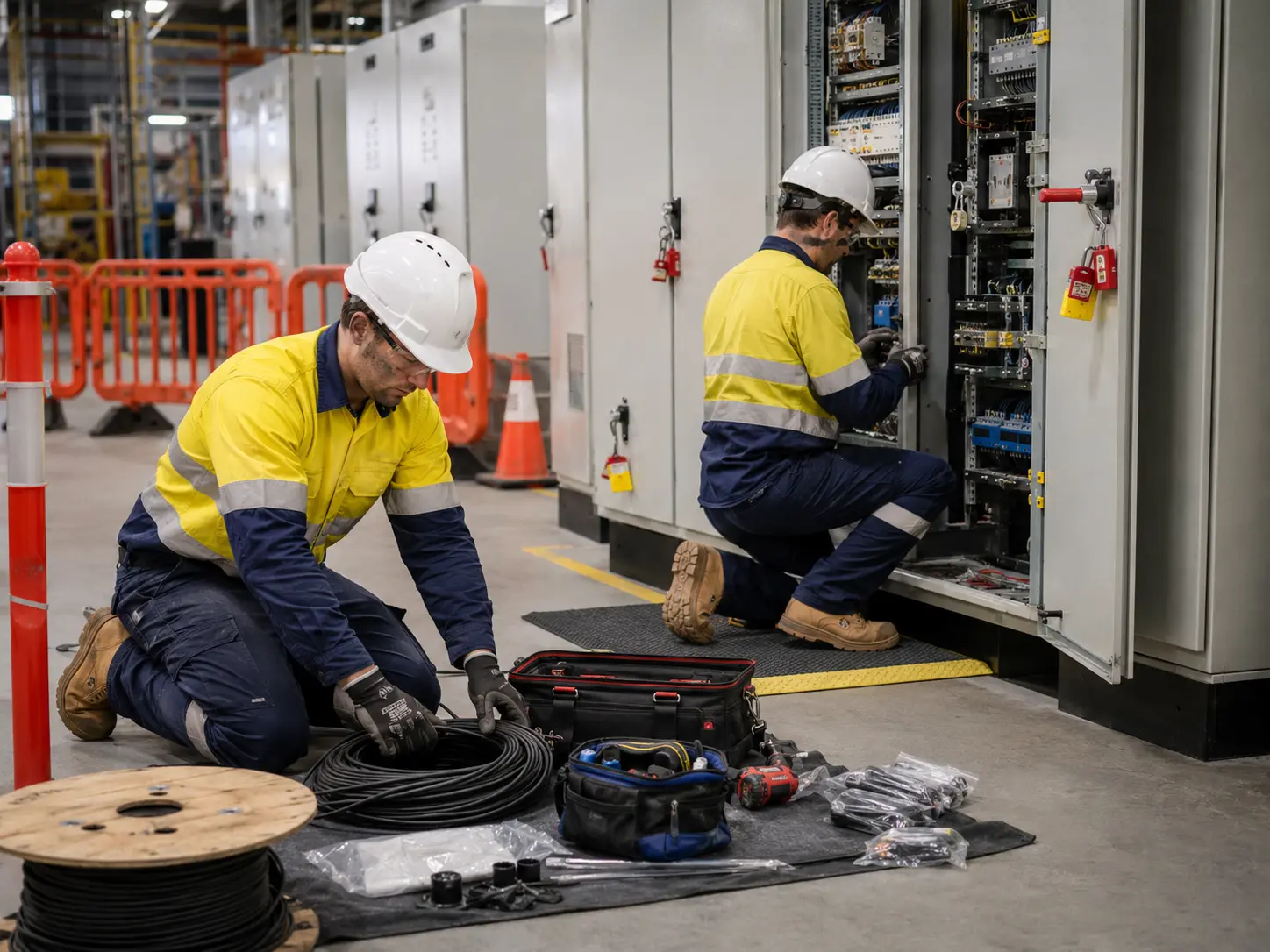

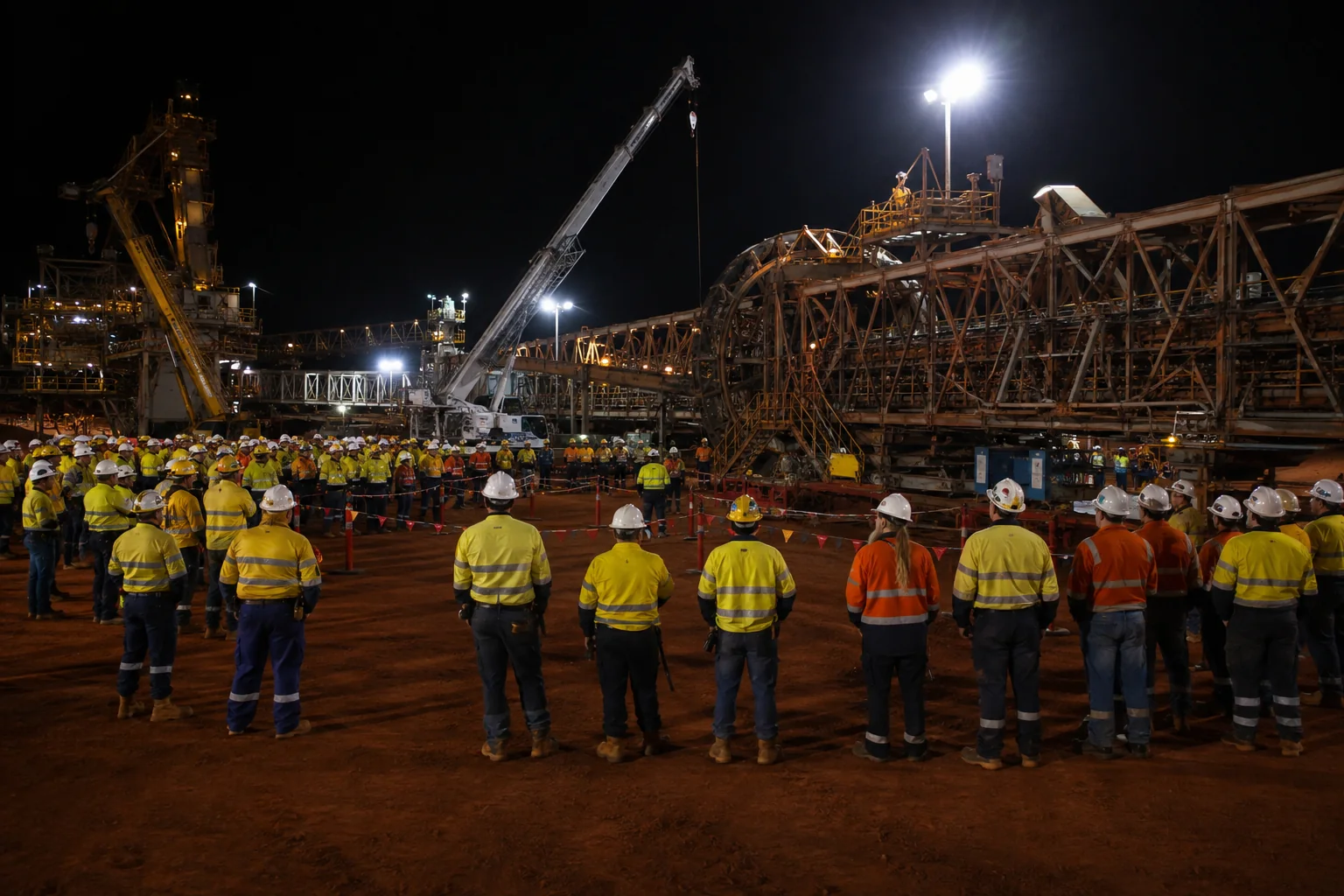
Accessible does not mean automatic: A candidate still needs to meet the exact job pack, demonstrate safe behaviour, pass the employer's screening and work reliably in long, remote shifts. Entry criteria vary between maintenance, construction, port and mine-site assignments.
An anonymised shutdown example
The three role sheets described the same shutdown setting but different formal thresholds for Trade Assistants, Riggers and Boilermakers.
Illustrative supplied rates
Boundary: These are anonymised figures from supplied 2025 assignment sheets. They are not market averages, current vacancies, award rates or guaranteed offers. Always read the rate with super, overtime, allowances, travel, stand-down and employment conditions.
Example mobilisation layers
Do not copy this list into every application: The supplied pack was for a particular shutdown and port work area. Ticket currency, EWP class, access card, inductions, PPE, tools and travel conditions must be confirmed for the actual employer, task and location.
The FIFO entry roadmap
Move in order. Each step should make the next one more focused, cheaper and easier to verify.
Pick one or two job families. FIFO is a travel arrangement, not a job title, so start with the work you can realistically perform.
Collect current ads for the same role and mark recurring must-haves, point of hire, roster, experience, licences and mobilisation requirements.
Check the regulator and the employer, then pay only for training that is legally required or repeatedly requested for your target work.
Record employers, dates, assets, tasks, responsibility, safety systems, outcomes and supervisors who can verify the work.
Target mine operators, contractors, labour-hire firms, shutdown providers and service companies that recruit your role family.
Keep clear documents, answer screening honestly and understand the medical, travel, camp, roster and conduct expectations before accepting.
 Prepare before you pay
Before buying a course
Does the work require a licence, registration or legally recognised training?
Is the item listed as essential, desirable or simply part of later onboarding?
Will they accept that exact unit, provider, issue date and currency for the work?
Training check: Confirm the provider is a current Registered Training Organisation and that the relevant training product appears on its scope at training.gov.au ↗.
Tickets without the fog
The same card can be essential for one task, useful for another and irrelevant for a third.
The authority required to perform regulated work: for example, the relevant trade or high-risk work licence. It must match the task and jurisdiction.
Check the regulatorWorking at heights, confined space, gas testing, first aid or other units may be requested because of the actual work front—not because every FIFO worker needs them.
Check the job adA White Card is required when the person is carrying out construction work. A mine site location alone does not make every role construction work.
Check the work scopeMedical and drug-and-alcohol screening, identity and work-rights checks, site inductions, licences, travel details and other documents can form part of onboarding.
Check the mobilisation packHigh-risk work licences authorise specific classes of work. Other training may support competence or access, but it does not replace the correct licence, employer verification or site-specific instruction.
Then investigate current training providers by state, with direct supplier links and a seven-point booking check.
Build the application
Your resume should help a recruiter answer three questions quickly: Are you eligible? Have you done relevant work? Can someone verify it? The guide now includes ATS-compatible Word templates and a separate project-history table.
Open the guide & templatesState the role family, location or point of hire and the work environment you are targeting.
Put current, relevant licences and expiry dates where a recruiter can verify them quickly.
Use asset + task + responsibility + outcome. Make it clear what you personally completed.
Show remote, shift-work, shutdown, regional or travel reliability only when you can support it.
Use supervisors who directly observed your conduct and capability and have agreed to be contacted.
Keep readable copies of identification, work-rights evidence, licences and statements of attainment ready for secure employer systems.
Two readiness questions
Police screening and underground capability are separate gates. Neither one replaces licences, medicals, inductions or role competency.
Understand the check name, accepted provider, point-in-time validity, record disclosure, privacy and secure submission.
Open the clearance guide →02 · WORK ENVIRONMENTCompare access, equipment, ventilation, ground control, emergency systems, shift travel and transferable experience.
Open the underground guide →Medicals, PEM and screening
A pre-employment medical, functional assessment, drug-and-alcohol screen and exposure health-monitoring program serve different purposes. Requirements and frequency vary by employer, client site, role, jurisdiction and risk.
Open the medical & testing guideSee the history, clinical, hearing, vision, lung, movement, lifting and job-specific checks that may be commissioned.
Use the authorised confidential channel, keep an accurate list and never stop prescribed treatment simply to pass a test.
Understand why a non-negative screen is not a confirmed positive and where laboratory and medical review fit.
Testing may be pre-employment, at access, random, for cause, post-incident or part of return-to-work monitoring.
FIFO onboarding checklist
Adapted for FIFO workers from the supplied onboarding checklist and the three role-specific mobilisation sheets.
What good onboarding should feel like
Timing varies: The supplied shutdown sheets estimated one to two weeks from medical completion to mobilisation and noted substantial online induction time. Treat both as one employer's example. Do not book travel or resign from another job until the actual employer confirms mobilisation.
Where to apply
Do not limit your search to the largest mine operator. Contractors, maintenance providers, labour-hire agencies, camp-service businesses and project teams employ a large share of FIFO crews.
Before accepting an offer
Verify the employer through its official website and contact details. Scamwatch warns jobseekers to stop and check offers that require payment to make money or arrive through unexpected social or messaging contact.
Read the official job-scam guidance ↗Official checks
Source-checked 30 August 2026. Employer programs, licence rules and vacancies can change.
Official definitions of basic, intermediate and advanced rigging high-risk work licence classes.
WA guidance on high-risk work licences, applications and recognised licence classes.
When general construction induction training is required on a mine site.
Confirm that an RTO is current and approved to deliver nationally recognised training.
Check current visa details, conditions and work rights.
WA electrical licences, permits and recognition information for interstate and international workers.
Check minimum pay rates, allowances and penalties where the Fair Work tool applies.
How to identify fake job offers and protect money and identity information.
Official process, accredited-provider and point-in-time validity guidance for employment police checks.
Regulator guidance covering underground ventilation, ground control, refuge, diesel emissions and emergency preparedness.
Method and independence: The supplied role sheets and onboarding checklist were anonymised and synthesised for this guide; employer, client, site and internal code names were removed. The FIFO Hub is not a mine operator, regulator, police agency, medical provider or Registered Training Organisation. Confirm current role, licence, training, screening, medical and mobilisation requirements with the relevant authority and employer before paying or applying.