Development
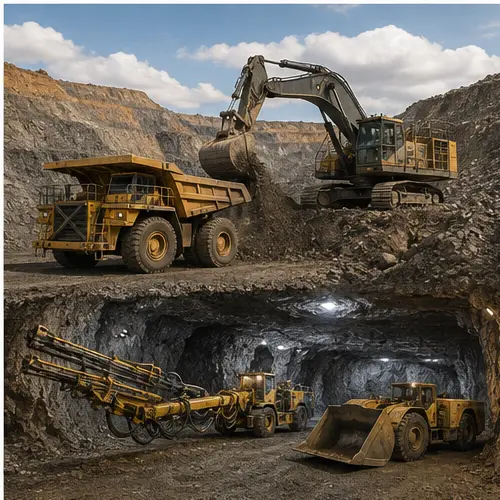
Jumbos · bolters · scalers · shotcrete rigsCreates and supports access headings. Drilling, ground support, scaling, services and excavation quality are closely linked.


Underground mining & FIFO work
What changes when a FIFO worker moves from an open pit or surface plant into a mechanised underground mine.
The first distinction
The flights, camp, roster and long shifts can look familiar. Below surface, the operating system changes: controlled access, engineered ventilation, ground support, constrained roads, specialised equipment and underground emergency arrangements all shape the working day.
Surface experience can be valuable underground. It is transferable evidence—not automatic underground competency.
Surface vs underground
“Above ground” is commonly called surface or open-pit work. Actual conditions vary with the mine method, depth, climate, fleet and role.
| Work dimension | Surface or open pit | Underground hard rock |
|---|---|---|
| Access and travel | Open-pit roads, plant access routes, workshops and large outdoor work areas. Distances can be considerable. | Entry through a decline or shaft, controlled personnel tracking and travel through a road network to the work area. Productive face time can be affected by underground travel. |
| Working environment | Daylight or night lighting, weather, UV, wind, rain, heat, dust and large temperature changes. | Artificial light, enclosed headings, restricted space and visibility, variable heat and humidity, water and dependence on engineered ventilation. |
| Ground conditions | Pit walls, benches, highwalls, dumps and excavations are managed through geotechnical design, exclusion controls and inspections. | Backs, walls, brows, stopes and development headings require ground assessment, scaling, reinforcement, support and mine-specific re-entry controls. |
| Air and contaminants | Dust and diesel exhaust are influenced by weather, traffic, water carts, suppression and separation from sources. | Ventilation delivers and directs air while removing diesel emissions, dust, fumes and heat. Ventilation status can control whether a work area is available. |
| Mobile equipment | Large blast-hole drills, excavators, shovels, loaders, haul trucks, dozers, graders and water carts. | Development jumbos, bolters, longhole drills, charge-up units, LHDs or boggers, underground trucks, shotcrete rigs and compact service vehicles. |
| Traffic and communication | Wide haul roads, intersections, dispatch systems, light-vehicle separation and long sight distances where design permits. | Narrower roads, gradients, corners, passing bays, restricted visibility and mine-specific radio, tracking, cap-lamp and traffic protocols. |
| Maintenance and services | Field service, workshops and fixed plant can offer more space, crane access and surface logistics, although live mine interaction remains complex. | Access, ventilation, heat, ground condition, service availability, recovery route and equipment dimensions shape every maintenance job and breakdown response. |
| Emergency response | Surface muster, road access and open-air response systems are built around the site hazards and geography. | Escape routes, underground communications, personnel accounting, self-rescue arrangements, refuge and mine rescue form an additional emergency layer. |
A representative shift
This is a learning sequence, not a site procedure. Every mine controls entry, blasting, ground, ventilation, traffic and emergency response through its own approved systems.
Receive the shift plan, hazards, equipment status, ventilation or area restrictions and production or maintenance priorities.
Complete the site's personnel-accounting, lamp or tracking and underground access requirements before travelling below surface.
Move through the decline, shaft and level network under local traffic rules. The journey can include gradients, passing bays, production interactions and restricted areas.
Confirm that the work area is available under the mine's ground, ventilation, blasting, services and task-control systems.
Operate, maintain, inspect, support or supervise within the approved work boundary while conditions and downstream activity continue to change.
Account for people and equipment, report defects or area conditions, close the required records and pass a clear status to the next shift.
Mechanised underground system
A delay in development, ground support, ventilation, services, production drilling or bogging can constrain several downstream crews.
Creates and supports access headings. Drilling, ground support, scaling, services and excavation quality are closely linked.
Prepares and fires production stopes under mine design, explosives, exclusion, ventilation and re-entry controls.
Moves broken ore and waste through constrained headings, intersections and tipping points to the underground or surface handling system.
Keeps the mine habitable and operable. Services are part of the production system rather than background utilities.
Making experience transferable
An employer needs to see what remains relevant and which underground gaps still need supervised training or assessment.
Name the exact machine, operating environment, production duty, traffic system, material handled and competencies assessed. Surface haul-truck time is not the same as operating an underground truck or bogger.
Show mobile or fixed assets, fault and planned work, hydraulic or electrical systems, access constraints, testing and handover. Explain how you worked around ground, ventilation, traffic and service controls.
Identify the mine method, planning horizon, software, geology, survey, geotechnical, ventilation or drill-and-blast decisions you supported and how they affected the operating cycle.
Target trainee, service, stores, nipper, offsider or support pathways only where the current employer advertises them. Do not buy generic underground tickets without a role requirement.
Ticket boundary: Working at Heights, Confined Space, Gas Test, first aid and high-risk work licences are role- and task-dependent. Being underground does not make every generic ticket mandatory. Check the current job advertisement, regulator, employer and site mobilisation pack.
Is underground better?
Workers often build specialist knowledge across the mine method, equipment, ground, services and shift handovers. The environment can reward disciplined communication and strong crew coordination.
Open pits and surface plants bring their own exposure to weather, traffic, scale, highwalls, dust and large equipment, but the physical environment can feel less enclosed.
Personal reality: Artificial light, restricted space, underground travel, heat, noise or limited visibility can be difficult for some people. Discuss genuine concerns before accepting the role rather than hoping the first swing will resolve them.
Before applying
Coal and hard-rock mines use different methods, hazards, equipment and statutory systems. Match the evidence to the actual operation.
Regulator and operator sources
Source-checked 30 August 2026. Mine methods, statutory appointments, inductions, equipment and competencies vary by jurisdiction and operation.
Official index covering underground ventilation, diesel emissions, ground control, fires, refuge chambers, scaling and underground equipment.
Current guidance and codes for managing geotechnical instability across open-pit and underground mining.
Guidance on refuge chambers used to protect underground workers from irrespirable atmospheres during emergencies.
Current Western Australian mine-safety regulations, including underground ventilation, emergency, exit, communication and statutory requirements.
Operator overview of a major Western Australian gold system combining open-pit and underground mines with processing plants.
Operator profiles showing different underground and open-pit gold methods across Kalgoorlie and the Northern Goldfields.
Safety boundary: This guide is conceptual career information. It does not replace an underground induction, task competency, statutory supervision, ventilation or ground-control plan, traffic rules, blasting clearance, emergency procedures, permits, isolations or approved mine instructions.