Concentrate
Flotation concentrate is thickened, filtered, sampled and moved to a smelter. A mine can sell concentrate without producing metal cathodes on site.


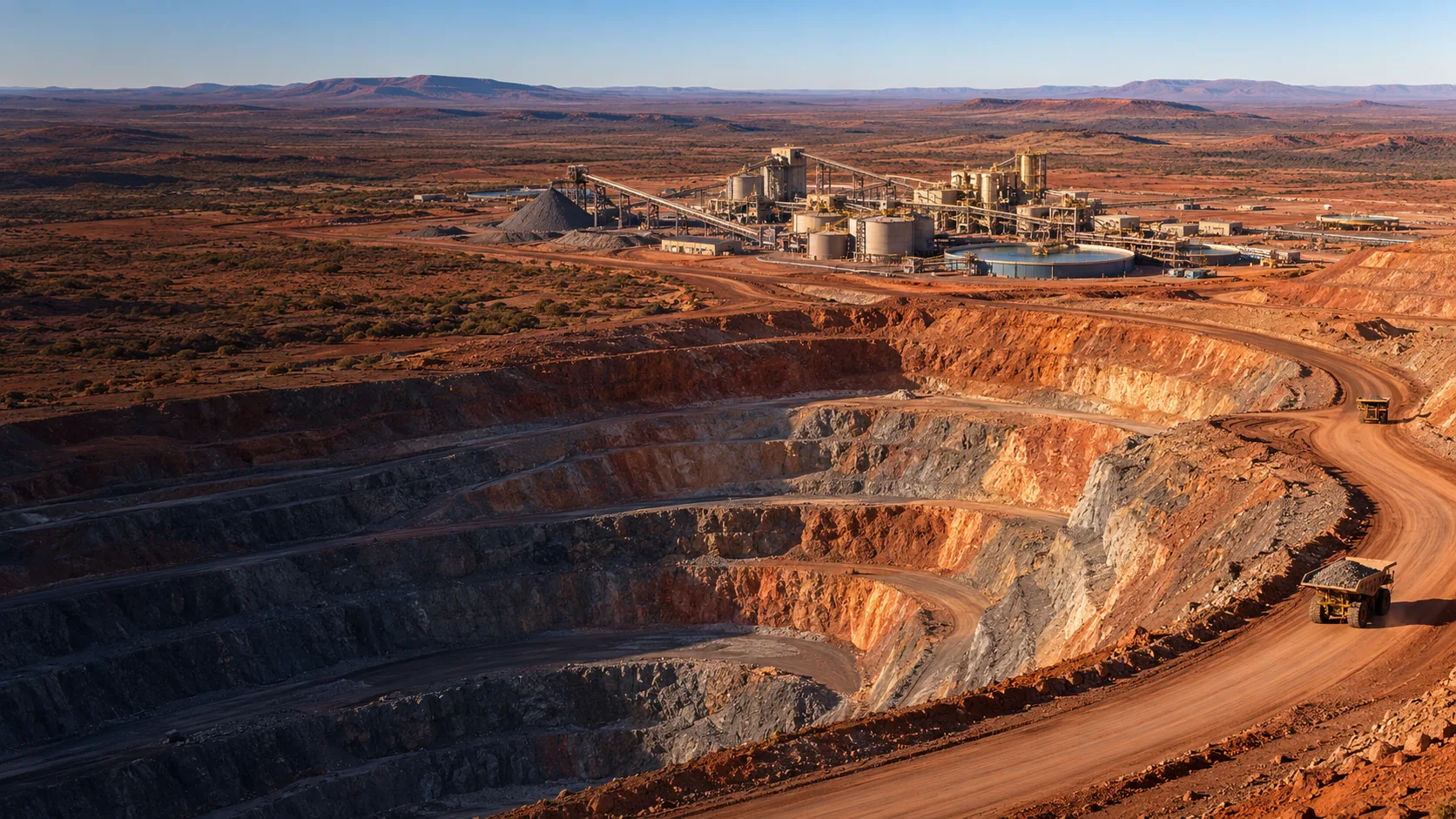
Mine to market · copper
Follow extraction, crushing, flotation, concentrate handling and the routes to smelting or copper cathode. See the equipment and FIFO jobs at every handover.
Choose a commodity
Follow how ore changes into a saleable product, and where the equipment and workforce handovers occur.
Why copper changes route
A copper mine can sell filtered concentrate for smelting elsewhere, or be part of a network that smelts and refines copper domestically. Oxide ore may take a leach and solvent extraction–electrowinning route. The six stages below describe a representative sulfide ore pathway, with those branches called out where they matter.
Copper is often recovered alongside gold, silver or other metals. One site may contain several processing circuits and product streams.
The operating chain
A learning model, not a site flowsheet. Select a role for its full profile and salary context.
Geologists define copper-bearing zones; mining engineers and surveyors plan safe extraction and grade control. Copper commonly occurs with gold, silver or other metals, so the payable mix and mineralogy affect the route.
A mine plan and identified ore to extract.
Open pits use drills, loading units and haul trucks. Underground mines use development and production drills, ground support, loaders, trucks or ore passes. Olympic Dam is an underground operation; the method changes by orebody.
Identified run-of-mine ore delivered to the crusher or ore-handling system.
Underground production operator · Mobile plant operator · Mobile plant mechanic or HD fitter
Crushers reduce the top size. Mills and classification circuits grind the ore until copper minerals can be separated from the surrounding rock. Ore hardness, throughput and particle size govern the circuit.
A classified slurry ready for concentration.
Process plant operator · Fixed-plant mechanical fitter · Fixed-plant electrician
Reagents, air and mixing help copper-bearing sulfide minerals attach to bubbles in flotation cells. The froth becomes concentrate; other material moves to a controlled tailings stream. Testwork and the ore determine the actual circuit.
Copper-rich concentrate and managed tailings.
Process plant operator · Control-room operator · Electrical & instrumentation technician
Thickeners and filters remove water before concentrate is moved in a contained system. Some Australian concentrate is exported to smelters; some is treated at an integrated domestic smelter such as Olympic Dam. Transport arrangements vary by mine.
Measured concentrate accepted by a transport or smelting route.
Process plant operator · Fixed-plant mechanical fitter · Maintenance planner
Where smelting is part of the route, heat and oxygen separate copper-bearing melt from slag. Converting and electrolytic refining can produce copper cathode. Oxide ores at some operations follow a separate leach, solvent extraction and electrowinning route instead of sulfide flotation and smelting.
Copper cathode or another saleable copper product meeting specification.
Process plant operator · Fixed-plant electrician · Mechanical or plant engineer
Choose the product route
Flotation concentrate is thickened, filtered, sampled and moved to a smelter. A mine can sell concentrate without producing metal cathodes on site.
A smelter and refinery can turn concentrate into copper cathode, with separate systems for gases, slag, electrolyte and other recovered metals.
Suitable oxide ores may be leached, purified by solvent extraction and recovered as cathode by electrowinning. It is an alternative flowsheet, not an extra step in every sulfide mine.
Australian worked example
Near Roxby Downs in the far north of SA, Olympic Dam brings underground mining and several processing steps together. The map locates the deposit; it does not show access roads or operating areas.
BHP describes grinding, flotation and leach circuits, copper and uranium solvent extraction, a copper smelter and refinery, and precious metals recovery. Copper SA also includes Prominent Hill and Carrapateena, whose concentrates feed the centralised Olympic Dam smelter and refinery.
Jobs can be FIFO from Adelaide, drive-in drive-out from regional SA or residential in Roxby Downs depending on the vacancy and roster. Check each advertisement; a mine location does not guarantee FIFO for every job.
FIFO roles and rates
These roles appear across copper operations. The figures are broad national market references from The FIFO Hub salary dataset; they are not Olympic Dam offers or copper-specific guarantees.
| Role | Typical copper stage | Indicative annual gross cash |
|---|---|---|
| Underground production operator → | Extraction | $140k–$230k |
| Mobile plant operator → | Extraction | $105k–$160k |
| Process plant operator → | Concentrator / refinery | $100k–$155k |
| Control-room operator → | Concentrator | $120k–$175k |
| Fixed-plant electrician → | Plant maintenance | $125k–$175k |
| Electrical & instrumentation technician → | Plant controls | $135k–$190k |
| Fixed-plant mechanical fitter → | Plant maintenance | $125k–$175k |
| Boilermaker or fabricator → | Structural maintenance | $115k–$175k |
| Geologist → | Resource / grade control | $115k–$185k |
| Mining engineer → | Mine planning | $145k–$190k |
| Maintenance planner → | Shutdowns / reliability | $120k–$165k |
| Supervisor → | Operations / maintenance | $150k–$210k |
Indicative 2026 Australian mining band · updated 27 September 2026. AUD annual gross, generally before super. These are broad editorial market bands, not promised rates or a valuation of one person. They combine advertised salary evidence with mining-market role, roster and seniority context. Separate hourly market profiles are labelled as such. Super, bonuses, allowances, overtime and travel treatment vary by employer and may sit inside or outside an advertised figure. Compare the roster, ordinary hours, shift penalties and allowances in the actual offer. Open the salary and roster calculator →
Sources and further reading
Process and location sources checked 28 September 2026. Salary bands are an editorial reference.
Ore types, flotation, smelting and Olympic Dam processing.
The underground mine and integrated concentrator, hydrometallurgical plant, smelter and refinery.
Official mine location, underground ore handling and concentrate production.
Olympic Dam, Prominent Hill and Carrapateena in the South Australian copper network.
Examples of grinding, flotation, thickening, filtering and sampling equipment.
South Australian government deposit coordinates used for the map marker.
The site's 2026 editorial market bands and methodology; verify the relevant offer and industrial instrument.
Technical boundary: Ore type, metallurgy, transport and product specifications vary by site. This educational guide does not replace approved mine plans, site procedures, chemical controls, engineering drawings or isolation requirements.