Material duty
What enters, what changes and what product or waste stream leaves.


Australian mining equipment · Coal
Follow the equipment used across Australian open-cut and underground coal mining, coal handling and preparation plants, rail load-out and export terminals.
Choose a commodity
Compare the machines used in iron ore, coal, lithium and gold—from extraction and processing to the final product handover.
Why the equipment changes
Coal can start in an open cut with draglines, shovels and truck fleets, or underground with continuous miners and longwall systems. The run-of-mine stream may then pass through a coal handling and preparation plant (CHPP), where equipment separates coal from higher-density rock, manages moisture and builds a customer product. The export route adds shared rail and terminal machinery, plus coal-specific dust, gas and spontaneous-combustion controls.
Start with the material. Follow what each machine changes, then read the handover to the next system.
Functional process graphic
This is a representative system map. Individual mines can use alternatives, bypass stages or locate downstream processing away from the mine.
Read the whole machine
The visible machine is only one part of the system. Utilities, controls, access, material condition and the next handover all influence whether it performs.
What enters, what changes and what product or waste stream leaves.
Structures, drives, wear parts, bearings, hydraulics, piping and load paths.
Power, instruments, PLC or DCS logic, communications, safeguards and interlocks.
Ore variability, quality targets, hazards, approved limits and the downstream constraint.
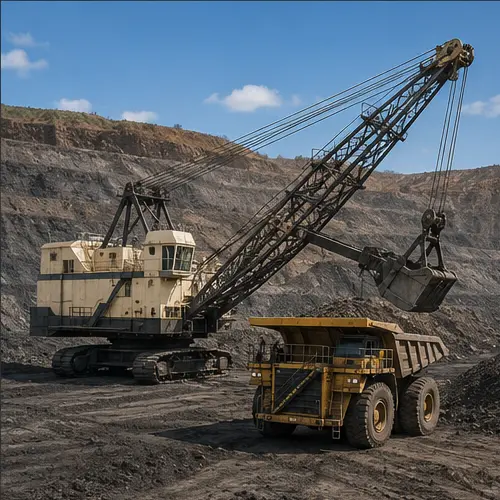
Remove overburden, expose coal seams, recover coal selectively and move coal or waste to the planned destination.
Operating principle
Production drills and blasting fragment competent overburden where required. Draglines can move large volumes of overburden directly into mined-out areas, while electric rope shovels, hydraulic excavators and front-end loaders load truck fleets. Dozers, graders and water carts maintain working areas and haul roads. Selective digging and dispatch keep coal, partings and waste in the correct material streams.
Major equipment and systems
Rotary or down-the-hole drills, drill strings, air systems, dust controls, charging support and blast-area controls.
Boom, mast, hoist and drag ropes, bucket, rigging, rotating frame, walking mechanism, electrical drives and machine control.
Electric rope shovels, hydraulic excavators or loaders with digging attachments, crowd or hydraulic systems and undercarriages.
Haul trucks, dozers, graders, water carts, service vehicles, dispatch, positioning, roads and refuelling infrastructure.
Maintenance focus
Condition and process watch
People around the system
Configuration boundary: Not every open-cut coal mine uses a dragline. Overburden depth, geometry, strip sequence, fleet strategy and coal selectivity determine the actual equipment mix.
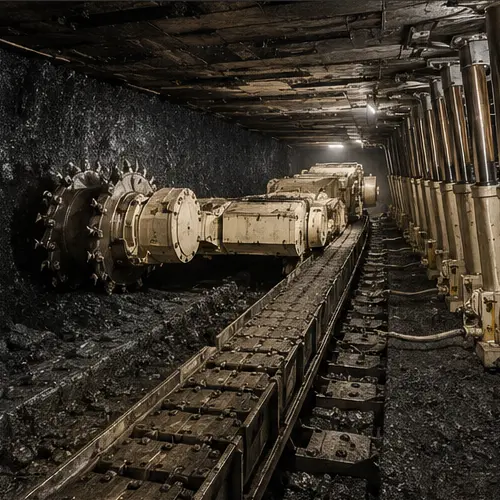
Develop underground roadways, support the excavation and recover coal from a controlled production face.
Operating principle
Continuous miners cut coal while shuttle cars or flexible haulage systems move it to a feeder breaker during roadway development. In longwall production, a shearer traverses the face, an armoured face conveyor carries coal to a stage loader and crusher, and powered roof supports advance in sequence behind the cut. Main belts then transfer coal toward the surface. Ventilation, gas monitoring, stone-dust or explosion controls and statutory electrical requirements are integral to the equipment system.
Major equipment and systems
Continuous miner cutting head, gathering arms, bolters, shuttle cars or flexible haulage, feeder breaker and services.
Shearer drums and ranging arms, armoured face conveyor, stage loader, crusher and powered roof supports.
Panel belts, main conveyors, drives, take-ups, transfers, bunkers and surface drift or shaft interfaces.
Ventilation, gas and dust monitoring, water, dewatering, communications, power distribution and emergency systems.
Maintenance focus
Condition and process watch
People around the system
Configuration boundary: Continuous-miner, bord-and-pillar and longwall layouts are not interchangeable. Underground work is governed by mine-specific statutory, ventilation, gas, strata and explosion-protection requirements.
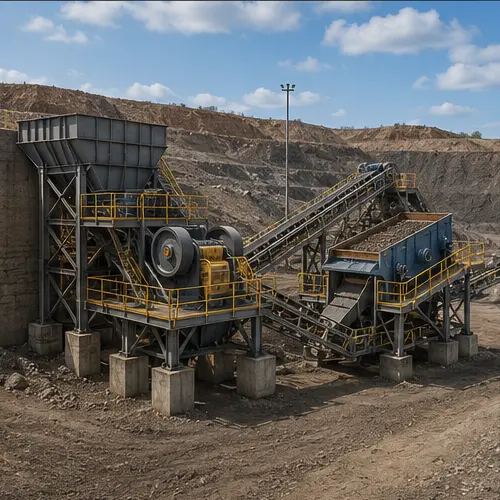
Receive variable run-of-mine coal, control the feed, reduce oversize and separate streams before preparation or bypass handling.
Operating principle
ROM bins and feeders absorb truck or underground-conveyor surges. Feeder breakers, roll crushers or sizers reduce oversize with less uncontrolled impact than a free-dumping stream. Screens separate size fractions so the preparation plant can send coarse and fine coal to equipment suited to each fraction. Magnets and tramp-metal protection help protect the downstream plant.
Major equipment and systems
Dump hoppers, bins, feeders, rock or lump breakers, level instruments, liners and dust suppression.
Feeder breakers, roll crushers or mineral sizers, shafts, teeth, drives, couplings and overload protection.
Vibrating or banana screens, decks, media, exciters, springs, support structure and discharge chutes.
Conveyors, belt scales, magnets, metal detectors, samplers, transfer chutes and route-selection controls.
Maintenance focus
Condition and process watch
People around the system
Configuration boundary: Raw-coal bypasses, crusher types, screen apertures and sampling arrangements are operation- and product-specific. They should not be inferred from another CHPP.
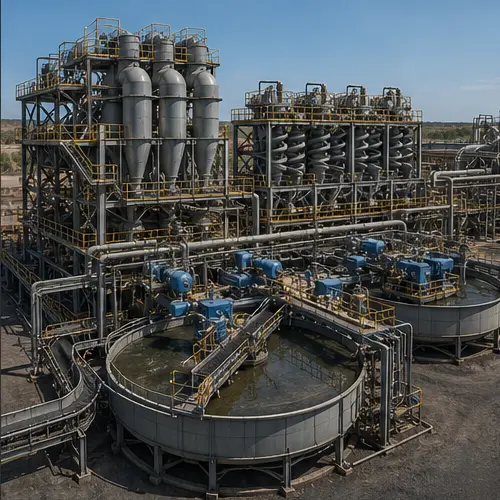
Separate lower-density coal from higher-density mineral matter and build product streams that meet quality requirements.
Operating principle
A dense-medium circuit mixes water with magnetite to create a controlled-density medium. In a dense-medium cyclone, centrifugal flow helps lower-density coal report separately from higher-density rock. Drain-and-rinse screens recover medium for reuse. Fine coal can pass through classifying cyclones, spirals or fluidised-bed separators; ultrafines may use flotation, where selected particles attach to bubbles and report to froth. The flowsheet depends on washability, size distribution and product specification.
Major equipment and systems
Mixing and correct-medium tanks, pumps, dense-medium cyclones, density measurement and control valves.
Drain-and-rinse screens, magnetic separators, dilute-medium sumps and return-water systems.
Classification cyclones, spirals or fluidised-bed classifiers, distributors, launders and slurry pumps.
Flotation cells, reagent dosing, air systems, froth launders, online analysers, sampling and plant DCS.
Maintenance focus
Condition and process watch
People around the system
Configuration boundary: Not every coal product is washed and not every CHPP uses the same combination of dense medium, spirals, classifiers or flotation. Coal washability and contract quality drive the flowsheet.
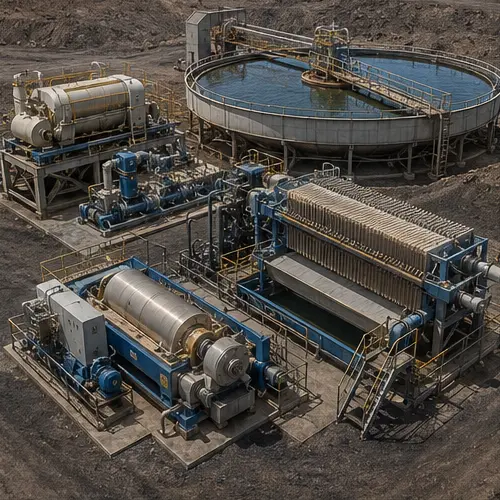
Remove process water, control product moisture, recover water and place saleable coal into a managed stockpile or load-out stream.
Operating principle
Drain-and-rinse or dewatering screens remove free water from coarser coal. Basket or screen-scroll centrifuges apply centrifugal force to reduce moisture further. Fine and ultrafine streams can use thickeners, filter presses or vacuum filters. Conveyors then combine, sample and direct product to stockpiles, while stackers or dozers shape piles according to blending, reclaim and spontaneous-combustion controls.
Major equipment and systems
Dewatering screens, spray systems, chutes and product conveyors.
Rotating basket or scroll, drive, bearings, vibration monitoring, feed distributor and discharge arrangement.
Thickeners, flocculant systems, filter presses or vacuum filters, pumps and filtrate return.
Sampling, belt scales, stackers or mobile plant, stockpile monitoring, water sprays and reclaim feeders.
Maintenance focus
Condition and process watch
People around the system
Configuration boundary: Product-moisture targets, residence limits, stockpile shapes and spontaneous-combustion controls are product- and site-specific. Use current CHPP and stockpile procedures.
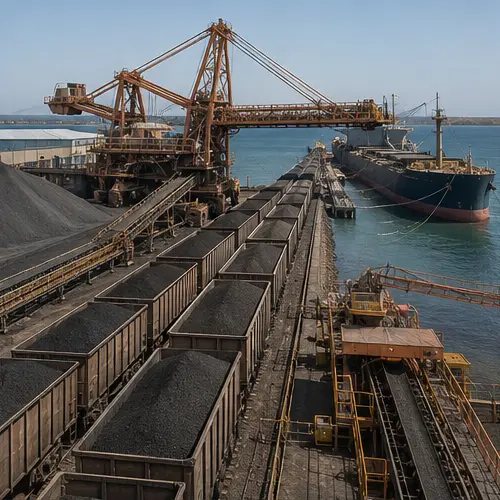
Load the rail consist, move product to port, receive it into the terminal and transfer the nominated coal into the vessel.
Operating principle
Mine load-out bins, gates, weighing and sampling systems load each wagon. Shared rail networks move the consist to a terminal, where bottom-dump wagons or another unloading system discharge into hoppers. Conveyors route coal to dedicated stockpiles. Combined stacker-reclaimers or separate machines build and recover stockpiles, buffer bins steady the wharf feed, and travelling shiploaders place coal according to the vessel plan.
Major equipment and systems
Product bin, feeders, gates, weighing, sampling, train detection and load-control logic.
Locomotives, wagons, track, signalling, dump stations, hoppers and terminal train sequencing.
Conveyors, transfers, combined stacker-reclaimers, stockpile monitoring, dust and fire controls.
Buffer bins, feeders, wharf conveyors, shiploader boom and chute, berth and marine interfaces.
Maintenance focus
Condition and process watch
People around the system
Configuration boundary: Rail systems, wagon discharge, terminal layouts, dust and fire controls, stockpile rules and loading rates vary by network and terminal. Published figures are facility-specific.
Sources and further reading
Source-checked 30 August 2026. Confirm details against current OEM and site-controlled documents.
Operator context for Australian open-cut and underground coal mines in New South Wales and Queensland.
Current operator overview of open-cut and underground coal assets, mine infrastructure and export routes.
Equipment-manufacturer explanation of crushing, sizing, dense-medium separation, fines recovery and dewatering stages.
OEM explanation of density separation, major cyclone components, wear protection and operating variables.
Terminal operator description of train unloading, conveyors, stockpiles, stacker-reclaimers, buffer bins and shiploading.
Network operator overview of the heavy-haul rail system linking mines with Queensland export terminals.
Technical boundary: Coal equipment, CHPP circuits, underground mining methods, gas and dust controls, spontaneous-combustion management, product specifications, rail plans and terminal procedures vary materially between operations. This guide does not replace statutory appointments, competency, approved procedures, OEM manuals, engineering drawings or isolation requirements.